Showing posts with label Vermeer. Show all posts

Thursday, June 13, 2024

The Art of Perspective

Perspective is one of my favorite art elements of Space. Using perspective can create the illusion of depth in a painting. It's important in creating the focal point of a painting, not only to create interest, but to emphasize the importance of an object, figure, or shape in your composition. To make your two-dimensional painting look three-dimensional, you may choose to vary size, position objects relative to each other, and use overlapping.

My personal favorite for teaching this topic is The Gleaners by Jean-François Millet. See More Seniors' Art -- Acrylic Landscapes for the six ways to create depth in a two-dimensional painting.

Café Terrace at Night (1888), Van Gogh

Perhaps one of the best examples of the use of perspective may be found in Van Gogh's Café Terrace at Night (1888). While somewhat cartoon-like, I appreciate his use of color and repetition of shapes. I hadn't noticed the color and relative size of the figures walking up the street outside the café, as I was focused more on the silhouetted patrons against the elliptical white tabletops. The oval shapes are echoed in the starry night sky, and the cobblestone street has more of a pointillist vibe. I'd have to see this in-person.


Bedroom in Arles (1888), Van Gogh


Also painted in 1888 is Van Gogh's Bedroom in Arles. Much more shortened in its perspective, the floorboards and the placement and size of the chair against the back wall create the depth. A second version added a checkerboard texture to the floor. Van Gogh was very selective about the colors of the objects and wanted to create a restful and dreamlike setting. I love the simplicity and absence of light and shadow.


The Last Supper (c. 1495–1498),
Leonardo da Vinci


Other versions of single-point perspective include Leonardo da Vinci's and Raphael's versions of The Last Supper. All lines converge just to the right of Christ's head, focusing on the central figure of the feast. The overlapping figures subtly emphasize depth in the foreground. The horizon lines up with Christ's head, with orthogonal lines radiating outward, and the long horizontal table grounding the scene.


The Dance Class
(1874), Degas


Edgar Degas used perspective in his painting of ballet dancers. In The Dance Class, Degas uses size and placement of his dancers to achieve depth in his painting. Like Van Gogh's bedroom, the floorboards recede from view and vanish in the distance. There's even a window far off in the distance through the ornate doorway. The cluster of dancers represents the ~horizontal line. The orthogonal line from the dancer with the red and blue bows to the teacher draws our eyes toward the light blue tutu at the end of the horizontal line. The red bow holds our attention left of center.


Rue de la Bavolle, Honfleur
(1864), Monet


Using mostly orthogonal lines, Claude Monet captured this street scene in the old port town of Honfleur. Due to the shadowing, Monet has divided his painting in half. He once again uses the contrasting colors characteristic of the Impressionists. He seems to have been experimenting with light and dark values as well. The figures in red and blue hold your interest and draw your eyes toward the center.


The Gold Weigher (1675),
Cornelius de Man


This final painting uses two-point perspective and is reminiscent of Dutch painter, Johannes Vermeer. It is painted by another Dutch painter, Cornelius de Man (1621-1706). Here, there are two vanishing points, one on the left and one on the right. Initially, I thought this painting was done by Vermeer, but even with the checkered floor, there is no bright blue and yellow that would be characteristic of his work. Well, maybe the soft blue of the woman's shoulder and the golden highlights of the table!

Thursday, November 24, 2022

Famous Artists & Paintings -- By Century

The Arnolfini Portrait (1434), van Eyck
15th Century

In this article, I'd like to review famous artists and their paintings, starting with the 15th century, highlighting my favorites. Earlier art primarily focused on religious subjects which, though ornately detailed, was pretty homogenous. Let's start with a work by Jan van Eyck, whose Arnolfini Portrait was included in my Avatars, Doppelgangers, and Lookalikes post. One of the most recognizable paintings of the 15th century, this double portrait also captures the couple's reflection in the convex mirror hung in the background. I saw it in person at the National Gallery of London in 2017. Van Eyck was considered an innovator, some saying that he created oil painting.


"Salvator Mundi" (1500), da Vinci


16th Century


At the beginning of the 16th century, Leonardo da Vinci painted this classic portrait that eventually sold for $450.3M. It was supposed to be on display at the Louvre Abu Dhabi in 2018, but it has yet to be seen in public. See my June 2020 post, entitled Encouraging Artistic Expression, for more details. His other more famous portrait, Mona Lisa, was painted during the same period. I saw her at the Louvre in Paris in 2011. His Madonna Litta was painted toward the end of the 15th century, residing at the Hermitage in St. Petersburg, Russia, where I visited in 2019.


The Hunters in the Snow (1565),
Pieter Bruegel the Elder


Later in the 16th century, Flemish painter Pieter Bruegel the Elder created The Hunters in the Snow. A large print of the landscape hung in my father's office at Price Waterhouse in NYC. It has always been one of my favorites! I love the cool teal color of the sky and frozen river. It's also a wonderful example of the use of perspective to create depth and the illusion of space.


The Saviour of the World
(1608-14), El Greco


17th Century


Moving to the early 17th century, we see El Greco's version of the Christ. The blessing gesture is similar to that of da Vinci's portrait, including the hand on the orb representing the world, although the color scheme is much more modern. I like the use of contrast, especially accentuating the face and the halo effect.


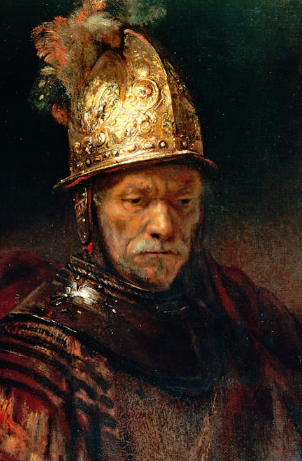
The Man in the Golden Helmet
(1650), Rembrandt


The mid-17th century paintings that I've chosen are three of my all-time favorite portraits. I do seem to gravitate towards portraits. Rembrandt is famous for having painted the most self-portraits though I love The Man in the Golden Helmet. It also inspired my work nickname 'Gelmet' which my co-workers gave me because of my gel hairdo. I often found people staring at the top of my head, much like how museum patrons might focus on the helmet in this painting.


Las Meninas (1656), Velázquez


There's something about this amazing family portrait by Diego Velázquez. To find out more, see my August 2020 post entitled Things That Go Together in Art – Subjects, Portraits, Landscapes/Seascapes, Still Lifes, and Couples. It does appear to have all the detail in the lower half of the painting, but it seems to work!


Girl with a Paearl Earring
(1665), Vermeer


This classic by Johannes Vermeer is known as the 'Mona Lisa of the North' probably because of her mysterious identity. Vermeer often employed blue and yellow in his detailed portraits, usually of women.


The Blue Boy (1770), Gainsborough

18th Century


Thomas Gainsborough and Sir Joshua Reynolds were rivals for the position of Painter to the King. On our trip to the UK in 2017, their paintings were curiously hanging side-by-side in one of the national galleries. Growing up in New Jersey, my next-door neighbor had a red sitting room where a copy of Gainsborough's Blue Boy was hung. One of the houses we rented in Port Townsend's Fort Warden had needlepoint versions of Blue Boy and Pinkie (by Thomas Lawrence) hanging side-by-side. The pair, often seen together, also appears in episodes of Leave it to Beaver just inside the Cleavers' front door entry.


The Age of Innocence (1788), Reynolds


I use portraits from Sir Joshua Reynolds and Gilbert Stuart when I do my wrapping paper self-portraits project with fifth graders. Included in one of the packets provided by Interurban Center for the Arts was his portrait of Lady Caroline (1778). The girl in this painting is unknown but is likely Reynolds' great niece.


Athenaeum Portrait
(1796), Stuart


It's unusual to find unfinished paintings on display in galleries and I've only ever seen one of them. I find it interesting that Gilbert Stuart intentionally kept one of his first portraits of George Washington unfinished to use as a model for later works. Martha Washington admired it, but Stuart refused her and painted another one instead.


Cenotaph to the Memory
of Sir Joshua Reynolds
(1833-6), Constable


19th Century


Another painting I saw at the National Gallery in London is John Constable's homage to Sir Joshua Reynolds. I enjoy seeing artwork in person, especially when it's something I've studied in school or researched for my blog or one of my classes. The stag is meant to represent the wild locale of the monument, which in actuality would have been smaller than a full-sized deer. It's up to the artist to create the focal point and provide it the proper emphasis.


Tiger in a Tropical Storm (1891), Rousseau


Here's another diamond in the rough from the National Gallery in London. It's a landscape by Henri Rousseau that could be perceived as a portrait of a tiger. Crouching tiger but no hidden dragon!


Les Oliviers (1889), Van Gogh
Of course, my all-time favorite artist has to be Vincent Van Gogh. It's difficult for me to choose a favorite. While doing research for this blog I continue to discover new (to me) Van Gogh paintings. For example, I saw this one at the Scottish National Gallery in Edinburgh. Like Van Gogh's Sunflowers, olive trees were another of his favorite subjects to paint.


I love the paintings of the French Impressionists, but there are too many for me to down select for this blog post. I also love the paintings of Henri Matisse and Marc Chagall. I highly recommend visiting their museums in Nice, France.

Capri Girl (1878), Sargent


Let's finish with the 19th century artists/paintings by including John Singer Sargent's portrait of Capri Girl. My daughter and I saw this work while briefly on exhibit at the Seattle Art Museum and we immediately fell in love with it. She appears to be leaning against the branch of a tree and gracefully becomes part of nature. Her bodice and hair blend into the dark background and her skirt disappears into the flowery field. She was a favorite subject of the artist.


Christina's World (1948), Andrew Wyeth
20th Century

My favorite artists of the 20th century are Salvador Dali, Pablo Picasso, Edward Hopper, Jacob Lawrence, Norman Rockwell, and Andrew Wyeth. Since we're primarily showcasing portraits here, and as a transition from Sargent's Capri Girl, I'm including Christina's World by Andrew Wyeth. His wife Betsy modeled for the painting inspired by the Olson (~30-yr-old) girl he saw crawling in the field.


President Obama (2018), Wiley


Kehinde Wiley is probably the best known African American portrait painter of the 21st century, although Simmie Knox was the first to paint the portrait of a President (Bill Clinton). I had the opportunity to see Wiley's paintings on exhibit at the Seattle Art Museum. I also got to see Jacob Lawrence's Migration Series, which was impressive but on a smaller scale than the large decorative works of Wiley. His intricate backgrounds are beautiful! While Lawrence used colorful shapes to build his symbolic compositions, Wiley used colorful patterns to surround and highlight his subjects.


So, who are your favorite artists? Your favorite painting? I find that I often choose to listen to the B-side of a record, straying from the more popular featured song. I also enjoy hearing the more obscure and less played selections (e.g., of Tom Petty songs) just as much as seeing newly discovered works by my favorite visual artists. As with music, you learn to love and appreciate many genres, though you will likely gravitate towards your favorites.

Sunday, November 13, 2022

Mona Lisa -- Mysterious Enigma, Misunderstood Masterpiece?

Mona Lisa (1503-06), da Vinci

While Leonardo da Vinci's Mona Lisa is perhaps the most famous painting of all time, attracting tens of thousands of viewers each day at the Louvre in Paris, it is also one of the most misunderstood artworks. Initially, the 3/4-view portrait of the supposed Italian housewife was copied by artists who admired it for its realism and "subtle gradations of light and shadow" (sfumato) employed by Leonardo. The imaginary background is also admired for its smoky quality, making it both landscape and portrait. Viewers are more taken in by her 'smile'.

Da Vinci produced the small portrait of an ordinary woman whom scholars identify as Lisa Gherardini, wife of the Florentine silk merchant Francesco del Giocondo. She is wearing a veil which is difficult to make out amidst the rest of the dark shades employed in her hair and costume. Other paintings of Florentine women typically show more opulent dress including jewelry and rosy cheeks. The subtlety of expression and apparent lack of eyebrows make her less interesting, though more mysterious, than her contemporaries.

LHOOQ (1919), Duchamp

It wasn't until its theft in 1911 that the painting began to increase in popularity. Even when I visited the Louvre a hundred years later, people crowded around a small window to view it deeply shrouded inside a secured chamber. Get ready for disappointment!

Perhaps it was Marcel Duchamp's kitschy mustached reproduction, mocking her as 'the ideal of feminine beauty', that reinvigorated its post-war popularity. My March 2020 post about Shamrocks, Bowler Hats, and Irish Artists shows Lisa wearing a bowler hat. I guess it's the mystery behind the painting, its theft, and the desire to see the real painting amidst all the reproductions that fuel the attraction. See more in the article, "Why is the Mona Lis so Famous?".

Girl with a Paearl Earring
(1665), Vermeer


Personally, I much prefer Vermeer's Girl with a Pearl Earring, also known as the 'Mona Lisa of the North' or the 'Dutch Mona Lisa'. A young Scarlett Johansson portrayed the subject (Griet) in the 2003 movie. A little publicity for the northern version!


The Cast of Mona Lisa Smile (2003)


Although I've seen several movies depicting Leonardo da Vinci as a character, I've yet to see one about his Mona Lisa. Curiously, there is the 2003 movie entitled, Mona Lisa Smile, which starred Julia Roberts as an educator, along with three other beauties. And a 1986 British crime-drama movie called Mona Lisa about a call girl.


Tomei as Mona Lisa Vito (1992)


In My Cousin Vinny (1992), Marisa Tomei costars as Mona Lisa Vito, the spunky and obstinate fiancée of Joe Pesci. Even the name of the famous portrait subject gets reused, perpetuating the title and its worldwide recognition! Let's not forget the song of the same name recorded by Nat King Cole in March of 1950.


So, would Mona Lisa be as famous without the somewhat anonymous name, enigmatic expression (the smile), theft attempts, or admired painting techniques? Maybe the mystery itself is what attracts us to it!

Monday, July 11, 2022

Avatars, Doppelgangers, and Lookalikes

How They Met Themselves
(1864), Rossetti


One of the few paintings that uses doppelgangers is How They Met Themselves (1864) by English poet and painter, Dante Gabriel Rossetti. There is some argument over which couple is the unreal pair, although I am guessing the couple on the left because of the glow surrounding them. The fact that the girl on the right is swooning indicates her shock and surprise at seeing their duplicates. However, the other opinion would argue that she is a zombie like that of Boris Karloff's monster. The couple on the right also seem paler by comparison.


Girl with a Pearl Earring
(1665), Johannes Vermeer


Clearly, there has been some spot-on casting of doppelgangers in the movies. For example, the 2003 movie starring Scarlett Johansson as Griet in the Girl with a Pearl Earring. I'm pretty sure that Johannes Vermeer is NOT Colin Firth's double!

She has also been included in several of my other blog posts: Mona Lisa, French & Italian Art Museums, and Masks and other Face Coverings Throughout History, art, TV, and Movies.


Lust for Life (1956)


Kirk Douglas made a perfect Vincent Van Gogh in the 1956 movie Lust for Life. My March 2020 post, Artist Portrayals in Movies – Twelve of My Favorite Biopics also included Andy Garcia as Amedeo Modigliani.


Johnny Depp as
Edward Ratchett

Portrait of Jean Alexandre
(1909), Amedeo Modigliani


Speaking of Modigliani, his 1909 Portrait of Jean Alexandre looks a bit like the victim Edward Ratchett played by actor Johnny Depp in 2017’s Murder on the Orient Express.


The Arnolfini Portrait (1434),
Jan van Eyck


Seen in my August 2020 post, Thing that go Together in Art…, the man resembles Vladimir Putin. I almost didn’t include this likeness for obvious reasons, though there are several others I purposely excluded. Feel free to look them up in the article, Famous People and Their Doppelgängers in Art. on the Daily Art Magazine website.


Schulman
Frazier

Turning to baseball players, and specifically the Seattle Mariners, here are two players with somewhat famous doppelgangers. Recently, I caught an episode of a reality show called Catfish TV with host, Nev Schulman. I thought he looked remarkably like Mariners second baseman, Adam Frazier.


Raphael Self-Portrait


Then, I was looking at my post, entitled 10 Artist with April Birthdays, and found that Raphael’s Self-Portrait resembled Mariners Starting Pitcher, Logan Gilbert. Usually Logan is photographed smiling, so it was hard to find a more pensive Gilbert.


Kal Korff


My own doppelgangers were pointed out to me when I was still working. One of my software development colleagues found a much younger picture of Kal Korff, author of Area 51 books, and posted copies all over our office. Fortunately, it was much more flattering than the photo I found and included here.

Terry Fator


Then, I was in line at an espresso stand on my way to work and someone in front of me told the barista that I looked like 2007 AGT winning ventriloquist Terry Fator. I probably should have kept that one to myself because it stuck for many years. At least it replaced the other one!


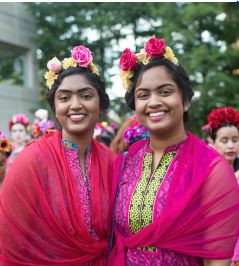
Costumed Fridas (2017) care of DMA


Check out this article, Over 1,000 Frida Kahlo Lookalikes Gather in Dallas in a Quest for a New Guinness World Record, on Art Net / Art World about the July 2017 celebration of Frida Kahlo's 110th birthday at the Dallas Museum of Art (DMA). The site also photographs everyday people posing in front of their own doppelgangers captured in museum portraits. I chose this photo because Frida often painted her self-portraits as twins.


With today's popularity of video games and the world of social media it seems that many of us are creating our own avatars to represent us. For a while I had a Bitmoji of myself, then I replaced it with another version that I am using with Facebook Messenger. 

Thursday, December 2, 2021

Making Connections with Artists & Animals

The Old Guitarist (1903-4), Picasso

Many of my posts connect art elements and principles to the artists and movements that were inspired by them. Two websites that I recently visited argue that an artist's fame comes from the connections they made with other artists rather than from their own creativity:

Study Finds Artists Become Famous through Their Friends, Not the Originality of Their Work and

Artists Can Become Famous Through Connections and Not Their Creativity

I like to look for famous artwork in movies and on TV. Picasso's The Old Guitarist frequently appears in episodes of Bewitched, which I watch repeatedly in reruns. It was hung rotated 90 degrees to the right to fit over the Stephens' fireplace. The Cleavers' front door on Leave it to Beaver is flanked by Sir Thomas Lawrence's Pinkie (1794) and Thomas Gainsborough's The Blue Boy (1770). Officers Row on Fort Worden in Port Townsend, WA even displayed this pair (in needlepoint) in the dining room of one of the houses we rented there. I hadn't connected the two Thomas's.


Here are three Picasso-style animal portraits. The Lab on the left may actually resemble Cubist artwork by Georges Braque.


One of my posts identifies the Fathers of Art Movements and further mentions the social network of member artists who shared similar visions that inspired their own unique styles and interpretations. Picasso developed his style by admiring African sculpture, particularly traditional African masks and ancient Egyptian art, as well as Iberian sculpture. He was influenced by the art of Paul Klee, as well as French painters Paul Cézanne and Eugène Delacroix.


Las Meninas (1957), Picasso


In 10 Quotes from Famous Artists - My Own Interpretation, Picasso is quoted as saying, "Good artists copy, great artists steal." In 1957, Picasso rescued a dachshund named Lump who had been diagnosed with a spinal condition. He lived 10 years longer than expected and died 10 days before his master. Picasso featured Lump as the dog in his recreation of Diego Velázquez' Las Meninas (1656).


Self-Portrait with Bandaged Ear (1889), Van Gogh

Vincent Van Gogh, Edgar Degas, and Gustav Klimt were all influenced by Japanese art. Van Gogh's interpretations can be seen hanging on the walls of his bedroom in his own paintings. His "The Angelus (After Millet)" is almost a direct copy of Jean-François Millet's painting but with his own color scheme.


Head of a Dog (1882), Monet


Claude Monet's garden is famous for its Japanese footbridge, which is prominent in his Waterlilies series. We visited his garden in Giverny, France in May 2011 on our trip to France and Italy. Monet was influenced by Manet, Boudin, Hokusai and Jongkind. Monet also painted animals, such as the domesticated turkeys I mentioned in my recent Thanksgiving Artwork post. He even painted a dog's head.


Doge Andrea Gritti (c1545), Titian


Continuing with Japanese connections, there is an Internet meme called doge which first appeared in 2013 and is based on a Japanese Shiba Inu dog named Kabosu. The word doge actually refers to an Italian magistrate from Venice or Genoa, dating back to the 16th century. It is also a word that is popular in the game of Scrabble. My daughter recently returned from a visit to Italy that included Venice. Her Korean village dog is a rescue that she originally thought was a Shiba Inu. 


One of my colleagues at Paws with Cause creates whimsical portraits of shelter animals dressed in regal attire. I love this portrait of Pepe the Dog. Pepe would qualify as the Doge of his animal shelter. While my friend and fellow resident artist is not famous, she is certainly creative!


Lady with an Ermine (c1490), da Vinci


The next artist on the mindshare index of famous artists is Leonardo da Vinci. He was influenced by Lorenzo de Medici, John Argyropoulos and Andrea del Verrocchio. I like how his Mona Lisa (1503) has been called a counterpart to Vermeer's The Girl with a Pearl Earring (1665) -- a.k.a. "the Mona Lisa of the North." I like his unusual Lady with an Ermine (c1490). The ermine (similar to a ferret) is a member of the family Mustelidae. The Washington Ferret Rescue and Shelter in Kirkland, WA  has ~150 ferrets looking to be adopted as fur-ever pets. While they aren't currently supported by Paws with Cause, they certainly seem worthy of support. I wish I had a ferret portrait to show you!


Le Civilisateur (1946), Magritte
The next artist on the list is Surrealist Salvador Dali, who was influenced by Pablo Picasso, René Magritte and Joan Miró. Dali often included animals in his dreamlike paintings and has been photographed walking his anteater and petting his ocelot (See Surrealists and Their Pets.). Magritte's portrait of his pet Pomeranian-Spitz, fetched €489,000 in March 2018. Just think of the shelter pets we could support with that kind of Euro!


Kachina, le Chien de Peggy Guggenheim (1946), Ernst


Max Ernst's portrait of his Pekingese, Kachina looks more like a lioness of grand scale in this Hopi landscape. Apparently, he had lived with American art collector Peggy Guggenheim (her dog?) before marrying American artist Dorothea Tanning.


Valse bleue (1954), Tanning


Tanning also painted an oversized Kachina in her Blue Waltz later in 1954. The painting is certainly surreal and the color scheme reminds me of paintings of couples by Marc Chagall. Some websites defined Kachina as a Lhasa Apso Terrier, rather than a Pekingese, which suits the lion reference better.


Le chat aux poissons rouges
(1914), Henri Matisse


Henri Matisse was influenced by Asian and African art, Post-Impressionists Gauguin, Cézanne, and Van Gogh, and his Mentor, Camille Pissarro. He was also a lover of animals, mainly cats, dogs, and doves. See The Friday Art Cat for Matisse's Interior with Goldfish (1914) and a second Etsy version by Deborah Julian where she adds Matisse's two cats -- Minouche and Coussi, or a black cat named la Puce (the flea). Here is his The Cat with Red Fish. I love these happy paintings. This one is reminiscent of others painted in the same room with the red printed wallpaper and window to the outside.


In keeping with the theme, here is an animal portrait that was painted in an event I organized on behalf of PawsWithCause for the shelter, South County Cats. I'm likening it to paintings by Fauvist Henri Matisse for its straight-out-of-the-tube colors.


"The Sower" (1888), Van Gogh


The striped backside of the cat makes me think of the background of Van Gogh's painting, "The Sower".


You may also like to read about The Most Famous Arty Pet Lovers And Their Furry Friends. For example, Georgia O'Keeffe's first dog was a poodle named Pancho, and she also had a total of six Chows as pets over her lifetime. Like Picasso, Andy Warhol favored dachshunds and kept two as pets.